Thursday, October 31, 2013

What comes first, the egg or the chicken

           "The chicken or the egg" of advertising can refer to advertising's knack for perpetuating stereotypes. Sometimes, an audience can confuse this perpetuance with an advertisement actually creating a stereotype. The goal of advertising has always been to reflect upon an audience a part of themselves that they agree with, that is to say, an advertisement hones but does not create.


       As evidenced, advertisements often perpetuate the dumb blonde stereotype, as it generates a cheap, quick laughter. Of course, in reality, blondes are equally likely to be as smart or as dim-witted an any other person with any other hair color--it's simple genetics. While it might be fun to laugh at the portrayed image of a dumb blonde, it's certainly not a laugh in good taste.

  1. dumb blonde commercial

    • by bbult
    • 6 years ago
    • 769,133 views
    blonde at a library.


          In addition, another common stereotype perpetuated by advertisers is that all African American people are athletic. This can be seen in advertising companies through the choice to portray mainly athletes of African descent to display someone as excelling in athletics; however, these companies never created the idea. It's been a debate, both scientific and anecdotal, as to whether Africans truly are superior athletes for decades. Still, there will always be athletes of all colors in all sports


          All in all, the stereotype exists in society often long before the advertisement says it does. An advertisement may come under fire for reflecting that certain ugly aspect of society, but it still remains an ugly aspect of society. However, it is no more right for an advertisement to perpetuate a stereotype as it is for an audience to believe and perpetuate it. The advertiser and the consumer both have the same humanity, but either can lose it when they decide to exploit the exploited.

Nostalgia

        The feelings brought about by nostalgia, that strange fuzzy happiness from a distant memory, can be used as a powerful marketing tool; however, it's hard to say whether this power often works. Our past emotions usually come out a lot more strong than our present emotions. For instance, if I buy a cheeseburger and love it, I am likely to buy it again and love it even more, but if I buy a cheeseburger and hate it, well, that's a one-star review on Yelp--very doubtful that I'd ever go there again. Thus, using nostalgia as an advertising technique has its ups and downs, and it's safe to say that there are certain areas where it should be avoided.


        On one hand, evoking feelings of nostalgia can result in much impulse buying and brand loyalty. A cookie company could simply write on a tub of cookie dough, "Just like grandma's!" and already there would be a select market of consumers whose experiences with grandmother's cookies has sold them on this tub. Nostalgia, in this sense, removes the control aspect of someone's shopping mind. Furthermore, if these cookies do taste close enough to grandma's that the consumer agrees with the statement, the consumer will be back for them--back for grandma. This technique could also work for company's who have used the same or similar branding for many years so that when children become first time shoppers, they know what to grab because they remember what was good as a kid.

        On the other hand, bringing up past memories can be instant turn-offs for some consumers. In this same vein, "grandma's cookies" can be a severely depressing image. Instead of grabbing cookies, the consumer is likely to go for whiskey (which should be stealthily cross-merchandised with the cookie dough to prevent a loss from this type of reaction). Nostalgia marketing can also completely miss a generational group if not properly placed. For instance, if a commercial featuring a 90s alt-rock classic is played during a late-night sitcom whose majority audience is 10-15 years of age, likely, the audience will not have a thing to remember.


        As a result, nostalgia marketing really isn't suited for some markets. Nowadays, it would be really hard to use this kind of marketing in technology markets, as people are more and more doing their research before entering the market. Brand loyalty will sway to a technically superior product, with the few exceptions of incredibly well-branded products like many of Apple's products. Furthermore, a trend-oriented market like fashion (and arguably technology as well) will never be dominated by the past. However, in a market where brand loyalty will always run high, like the grocery market, nostalgia marketing usually gives favorable results, with only the most sensitive customers being turned-off by their memories.

        All points considered, nostalgia marketing can be an impacting advertising technique, in certain markets. Though trend-oriented and research-oriented markets can look to the past for inspiration, they cannot trust the past to pull in consumers. All advertising should pull on some emotional string, and these markets have plenty of emotions to explore besides the ones evoked by nostalgia. Sounds, smells, and tastes, some of our primal senses, give rise to nostalgia, an almost instinct-like happiness, which is why in certain markets, despite whatever general advantages and disadvantages there may be, nostalgia dominates.

Saturday, October 26, 2013

Harley affect

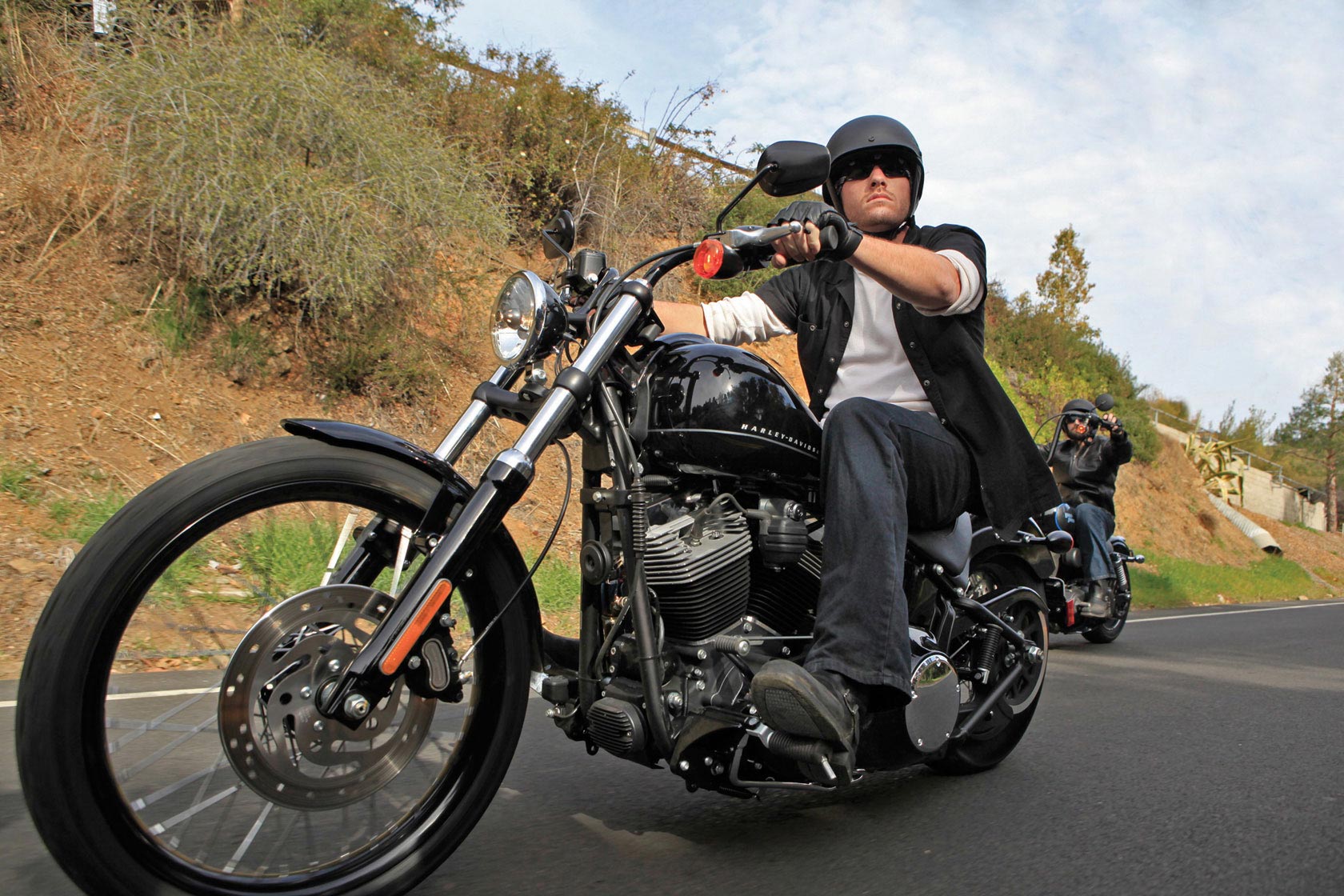
        Rebellious, care-free, tough--the Harley Davidson personifies the all-American badass. As such, the company also pioneered an equally rebellious, and thoroughly unique, advertising technique: the posse ride. In a posse ride, hardcore Harley riders ride together on an organized route (courtesy of the Harley Davidson company). The rides help establish deeper connections between both the many riders and each other, and the riders and the company, creating a strong sense of community amongst all Harley owners. Despite these successful rides, the company could stand to integrate more techniques into their advertising.

         To explain a little more, these rides are organized by the Harley Davidson company to solidify the meaning of its brand to the people. The most intervention the company has in these events is during the events that it plans along the determined route. It's undeniable that such a freeing experience for the riders would fail to bring them together, which can only help their perception of the Harley Davidson company.

        However, continuous involvement in this events may not be in the best interest of the company. Many times over motorcycle enthusiasts and Harley riders will say that the greatest part of riding is the freedom. While the Harley Davidson company has a right to bring together its riders, it almost stands to benefit more from the riders controlling their own events.

        More than just the organization of these rides, the Harley Davidson company could benefit from social media involvement. Facebook, as well as other social media websites, have become some of the strongest and simplest ways to gather like-minded people together for spontaneous and organized events. Harley Davidson could evolve their posse rides to be self-created using social media, yet still retain the full endorsement of Harley Davidson--the ultimate freedom of travel for its members.

        Undoubtedly, Harley Davidson scored when the created the posse ride. This sense of community has solidified the company as an American icon. However, the company can be so much more than just an icon. If they adapt modern social media advertising techniques, they can push themselves to be just a relevent today as they ever have been in the past.

Pepsi What? Pepsi Blue

      Everyone makes mistakes--unfortunately for a major company like Pepsico, the people will not forget one of its biggest blunders: Pepsi Blue. The product was supposed to be the unique berry-flavored (and colored) rival to Coca-Cola's successful Vanilla Coke, but it fell so far from that goal. Despite posting some sales gains for PepsiCo, the product ended up having a run of less than two years and causing quite a stir with its ingredients.

      Initially, PepsiCo gave a good push to its one-of-a-kind soft drink. It appeared in everything from baseball game promotions to product placement in movies to an ad with Britney Spears to a music video for a since-forgotten alt-rock band. All the promotion in the world, however, could not make this product into more than what it was: a sickly-sweet, oddly-colored soda.

Pepsi Blue Commercial (Featuring Sev performing Same Old Song (Pepsi Mix))

  • by tboy24
  • 1 year ago
  • 5,440 views
Commercial for the defunct cola, Pepsi Blue, which failed miserably. Featuring Sev performing Same Old Song (Pepsi Mix)
      So then, one must wonder what went wrong? Many factors create a successful product, the first of which being that the product is something that people want. Soda-drinkers are notoriously attached to their favorites, so any old take on a classic (see: Crystal Pepsi, New Coke, etc) usually doesn't blow over so well. Furthermore, a company's advertisements must connect with the company's target audience. PepsiCo knew its target--teens and other young people--but I don't feel that it connected strongly enough with them as evidenced by the lack of Pepsi Blue in today's society. Pepsi's strongest commercial for the product was with a largely unheard of (at the time) band who is still largely unheard of outside of their participation in the promotion of Pepsi Blue. It just didn't stick.

      On top of all this advertising disconnect, Pepsi managed to cause worry over their soda that wasn't related simply to its high sugar content. Blue 1 creates the candy blue color of Pepsi Blue. At the time, and in some cases to this day, many countries had the food additive banned, as it was known to induce allergic reactions in people with asthma. This negative press surely couldn't have helped the already ailing beverage.

      After all this, though, Pepsi still remains the second largest foor & beverage business in the world. Pepsi Blue may have stained some minds, but a large company will rarely take a loss from a product flop. Had PepsiCo been a startup whose initial product was this shiny, blue travesty, we might be telling a different story today, but when it comes right down to it, Pepsi Blue was a strage twist on a popular product that couldn't quite stand the test of time.

Sunday, October 13, 2013

Brain washing

        Men and women, throughout their existence, have always stood on uneven grounds. In many religious customs, such as those in Judaism, Christiany, Islam, and many others, women are shown as the housekeepers, while men are the workers. The same can be seen in the reflected cultures of these religions in European and Middle Eastern society. While modern-day cultures display more relaxed views of gender archetypes, the concepts still exist


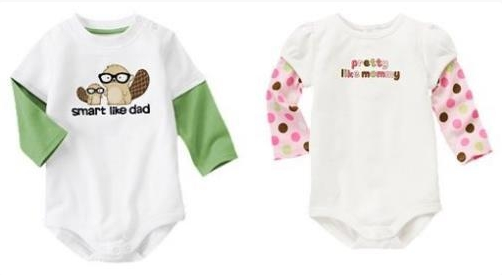
     For instance, baby boys are still born into blue, while baby girls are born into pink, in the United States. When parents shop around at Target for their new babies, all we still see in the boys aisle is jeans and t-shirts covered in cars and comic book characters and heroes. In the girls section, we find dresses, frilly clothing, and pastel colors. Wendy Norris remarks that "the underlying message [of baby clothing] is much more disturbing" as baby girl clothing still encourages that "[a female's] worth is inextricably linked to attractiveness and stereotypical feminine behaviors." At least her first steps likely will not be in pumps.


     Norris continues, telling experiences of other with the problems of not trying to influence their children with these stereotypes. Boy are seen as the tougher gender so they are give clothes that have something to do with basketball, soccer, or any other tough sport. In reality some of the toughest police officers and soldiers are in fact women. There is no way around the gender stereotype humans say we have so amazingly strived against.

    The past stereotypes created by society for both men and women has evolved and gender equality has developed, but humans still find themselves, even in little ways, still experiencing those pasts. The clothes boys and girls are reactions to those past and the past should stay where it is. We should strive to erase those gender differences starts with stereotypical need people have in clothes for girls verses boys.


Tuesday, October 1, 2013

Racial Clash

Black and white, though simple colors, often cause a lot of tension when brought up together--that is to say, people see color very clearly. In advertising, it's common practice to play to your audience through color. Racial profiling, then, is the practice of using race to target an audience. Though race may not have much to do with the product itself, customer identification will identify the product to the world.


For instance, the South Pole clothing line has a large presence in urban, low-income, largely African-American communities and stores who cater to those communities, such as discount retailer Ross or TJ Maxx. If you look at an ad for South Pole products, the company clearly knows their audience, as almost all of the models are of African-American descent. South pole shows their audience themselves as a better version of themselves, that is to say themselves in South Pole clothing. This is racial profiling, not racism.


However, targeting race can be far more offensive. Occasionally, in advertising, racial characteristics will be displayed in such a way that the target race is offended for comedic effect or shock value to get associate something with the product. Racial stereotyping, then, is the practice of using race to burn an image into the audiences' mind. Once again, race may not have much to do with the product; however, the association of the racial spotlight is not with the target audience.
  1. Thumbnail :25

    !!AUSTRALIA'S KFC COMMERCIAL COOKING UP RACISM?!!


      To explain, we can see in this commercial that two groups stand at odds. One group, the white Australian, stands in the form of one lone, calm man trying to watch a game. The other group, the natives ("West Indians"), show themselves to the audience as a loud, obnoxious people who can be quieted only by the
      presentation of KFC, as if they were animals. In the context of this commercials region of origin, this
      advertisement is playing strongly on the racial divide of the two groups for shock value. It is an attempt to get the audience to remember a startling scene with an attached name, not a valued product. This is racism, albeit with harmless intentions.
So then, do these types of advertisements harm anyone? Is one more harmful than the other? While an advertisement like the South Pole ad will probably harm only the most sensitive people, those trying to escape all forms of profiling, an ad like the KFC ad directly targets and exploits an entire group of people and is likely to harm someone. Many advertisement companies should take a good look at what their ads are presenting to the world, for public media sways public opinion. There are ethics and responsibilities in advertising that many people seem to ignore, and these slips in judgment do no one any good.

Thursday, September 19, 2013

Advertising Appeal

      All advertisements have appeal; however that appeal varies widely on audience and intention. Something as simple as a comb could be marketed so many different ways. Is it a design meant for men or women? What age? Who sells the most of other products from the same brand? Is there anyone who should be using the comb that isn't already? These are all valid questions when composing the next comb ad and are likely all questions that go through the minds of advertisers before they decide on their exact methodology.


For instance, Carl's Jr features Paris Hilton wearing a bathing suit in front of a sleek car to advertise their cheeseburger. To the side they quote, "She'll tell you size doesn't matter. She's lying." Who does this ad target? Cars, sexy women, big burgers, allusions to penises--young men of course! Paris Hilton likely rarely consumes a meal like this; more often she probably gets told that she should eat a burger. But what man thinks of this reality when there's the fantasy of an attractive woman with an attractive car and an attractive burger? This appeal to sex, to fantasy, to challenge, and to indulgence is what wins for Carl's Jr.


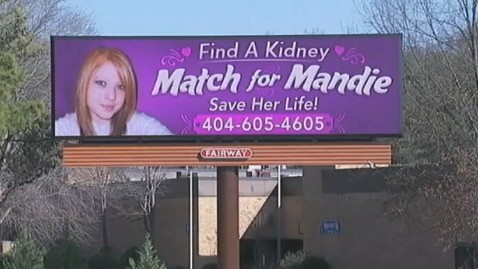
      Now, this billboard seemingly advertises nothing in its innocence. "Find a Kidney. Match for Mandie. Save Her Life!" And suddenly, my fingers dial  (404)605-4605. Do you see that girl? She needs help! Don't for a second think that she doesn't exist! Don't for a second think that she's just a marketing tool! You're doing something great by saving this girl's life, even if you don't. This basic appeal to kindness and humanity can be an incredibly useful tool for this organization yet unfortunately a devastating tool for an organization with less of an altruistic intent.


     Madea! Oprah! Given the popularity of these figures, one immediately tries to figure out what they're talking about. Is Oprah giving away something again? Is there a new Madea movie? No and no, but Oprah does have a new network and you should try and find it so you can watch the two day special! Appeals to celebrity will often work to grab attention, at the very least, which really seems to be the only goal of this particular advertisement.

Whether an advertisement appeal calls to our higher brain, lower brain, or heart, it calls to something. Sex, urgency, and humor all make us do at least one thing: remember, and through exploring just these three simple ads one can see that these memory devices are diverse. I can only hope that one day they earn me money rather than take it!